01 · Collect
Weighed in at the gate.
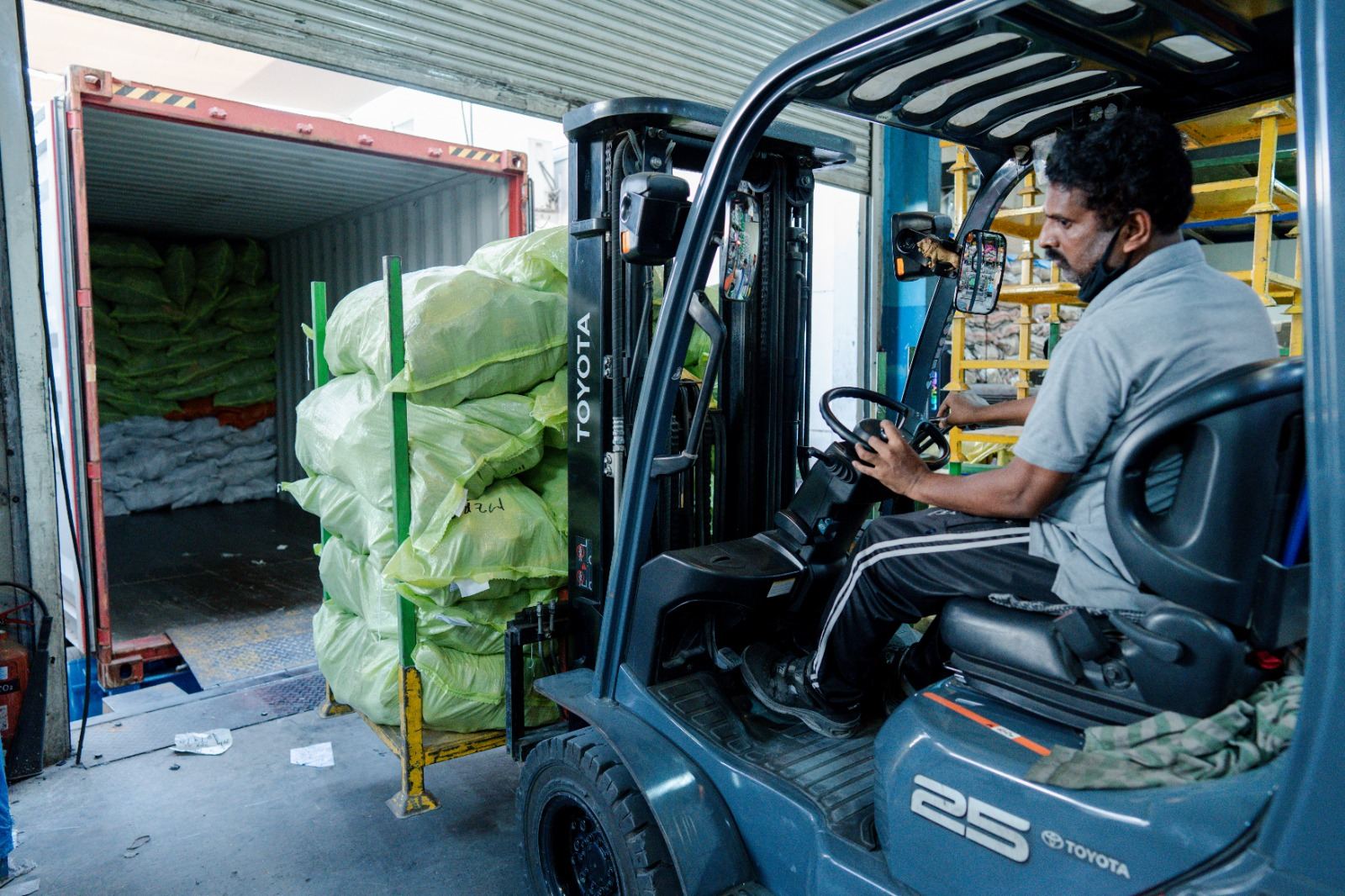
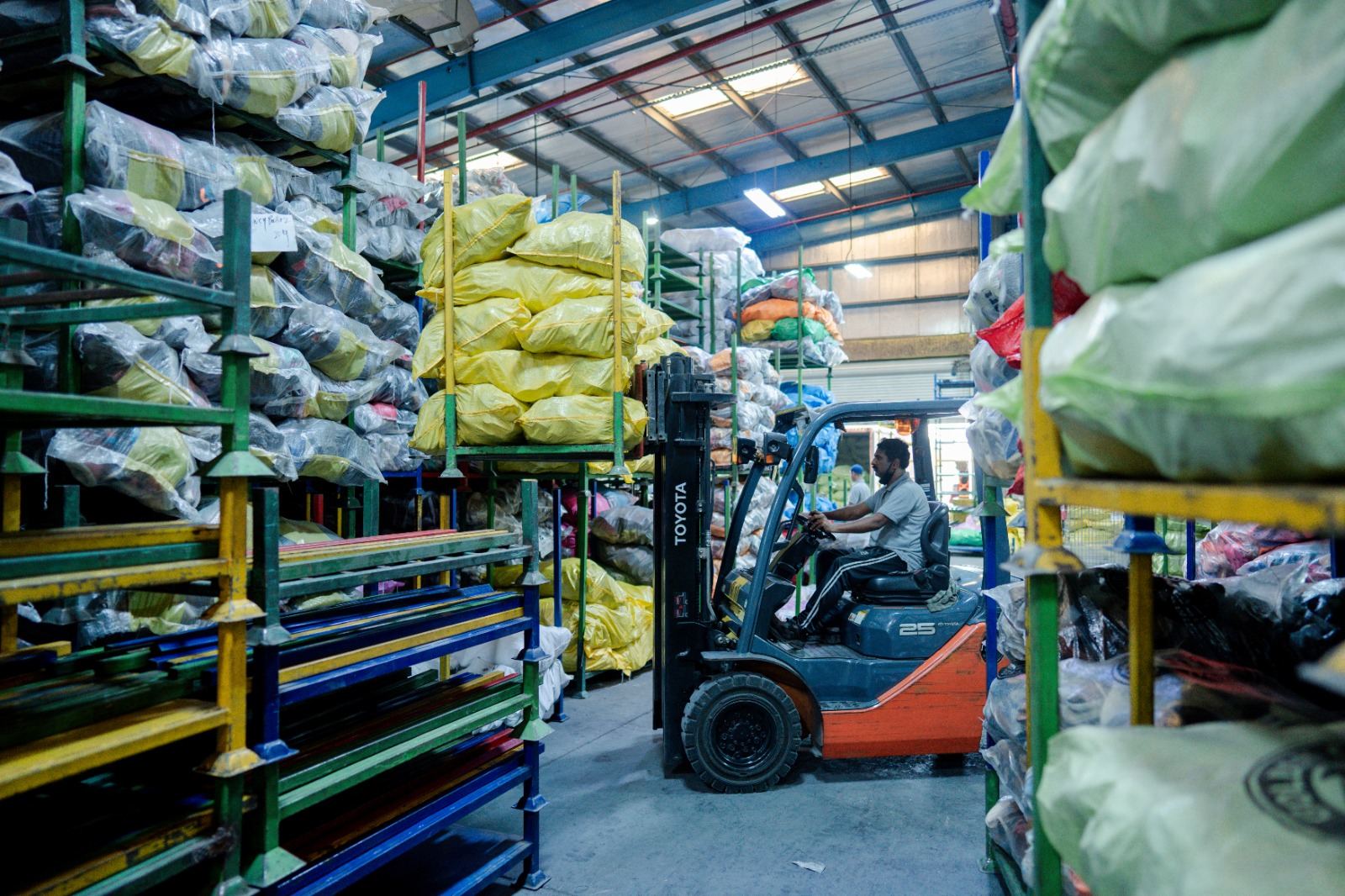
Product reaches us from brand take-back schemes, retailer returns, charity collectors and industrial sorters in Europe, the USA and the Gulf. Every consignment is weighed in and given a lot number at the gate.
Most recycling of footwear means shredding everything. We do the opposite: every piece is handled by a trained grader who sends it to the highest-value route it can take. Reuse first, repair second, material recovery last.
Product reaches us from brand take-back schemes, retailer returns, charity collectors and industrial sorters in Europe, the USA and the Gulf. Every consignment is weighed in and given a lot number at the gate.
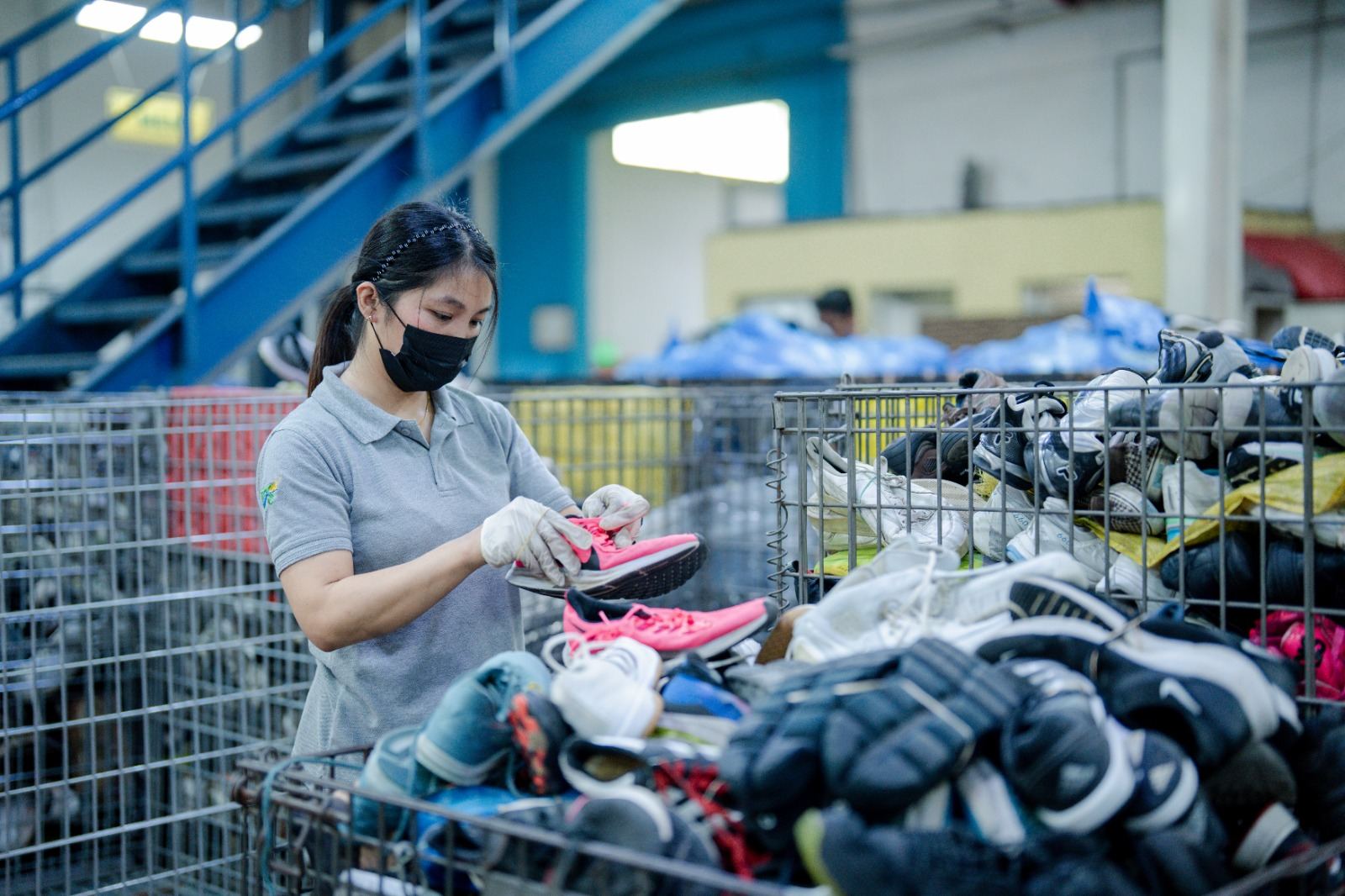
Each pair is inspected by hand and sorted into grades from like-new to beyond repair. Graders are trained on our own written standard and re-tested quarterly. This step decides everything that follows.
Wearable footwear is packed by grade and exported to markets where demand is strongest. Reuse is the lowest-impact outcome for any shoe, and it is our first choice.
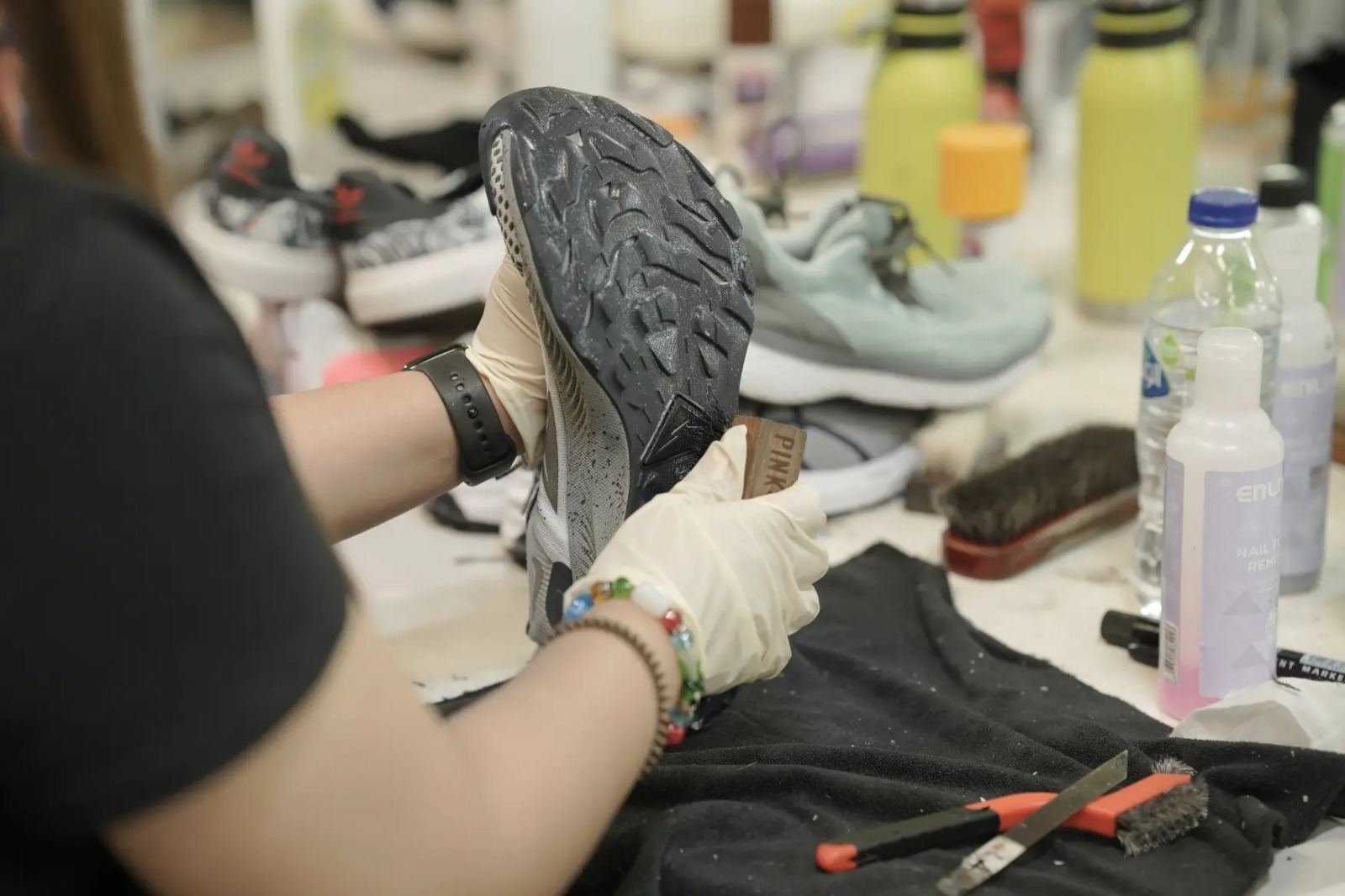
Pairs with fixable faults go to our repair and refurbishment unit, where soles, heels and stitching are restored to a wearable standard before returning to the reuse stream. 49,466 pairs were refurbished in 2025.
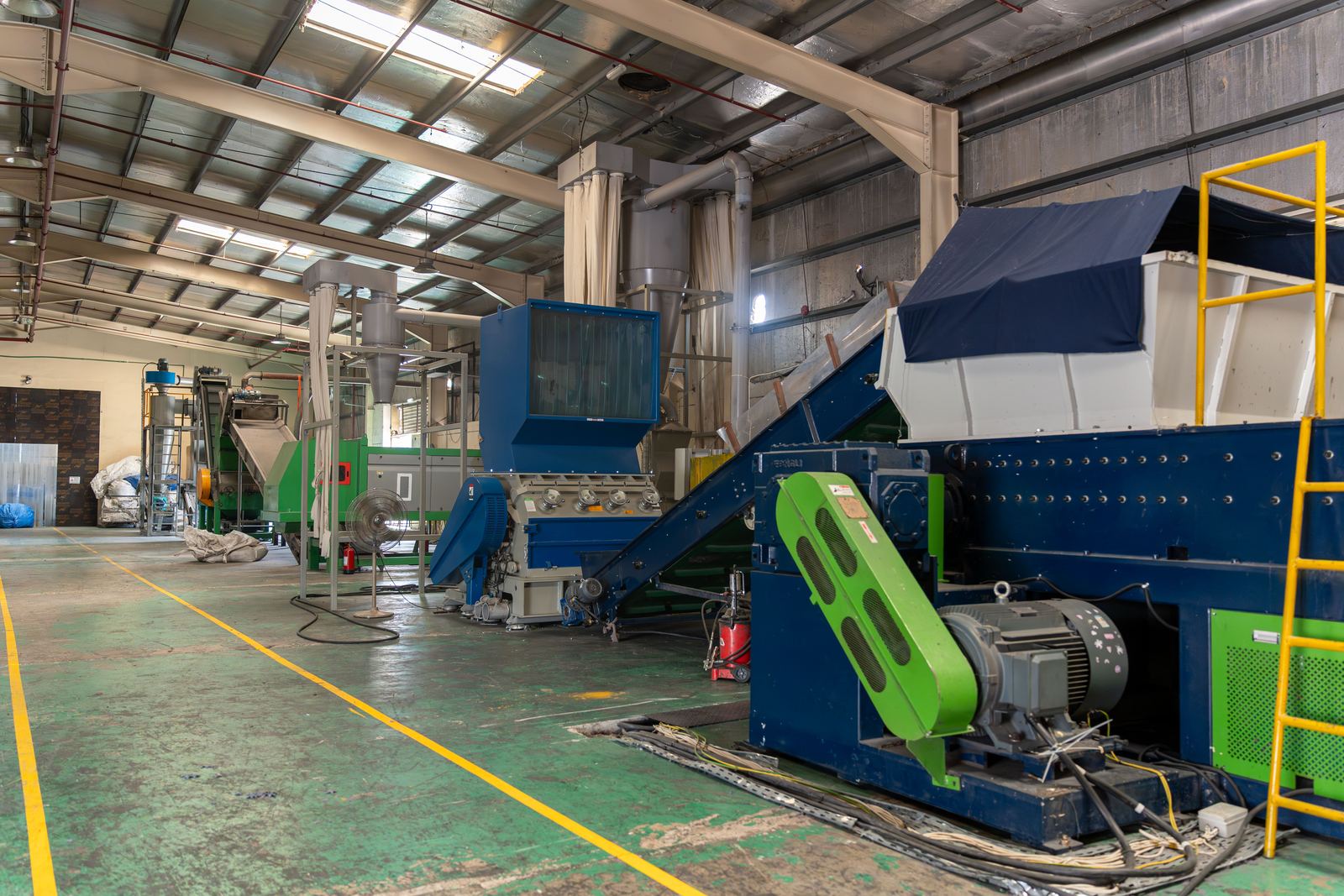
Unwearable product is stripped: soles separated from uppers, textiles pulled by cyclone, metals removed by magnet and eddy current. Rubber and EVA foam are granulated; mixed synthetics go to fuel.
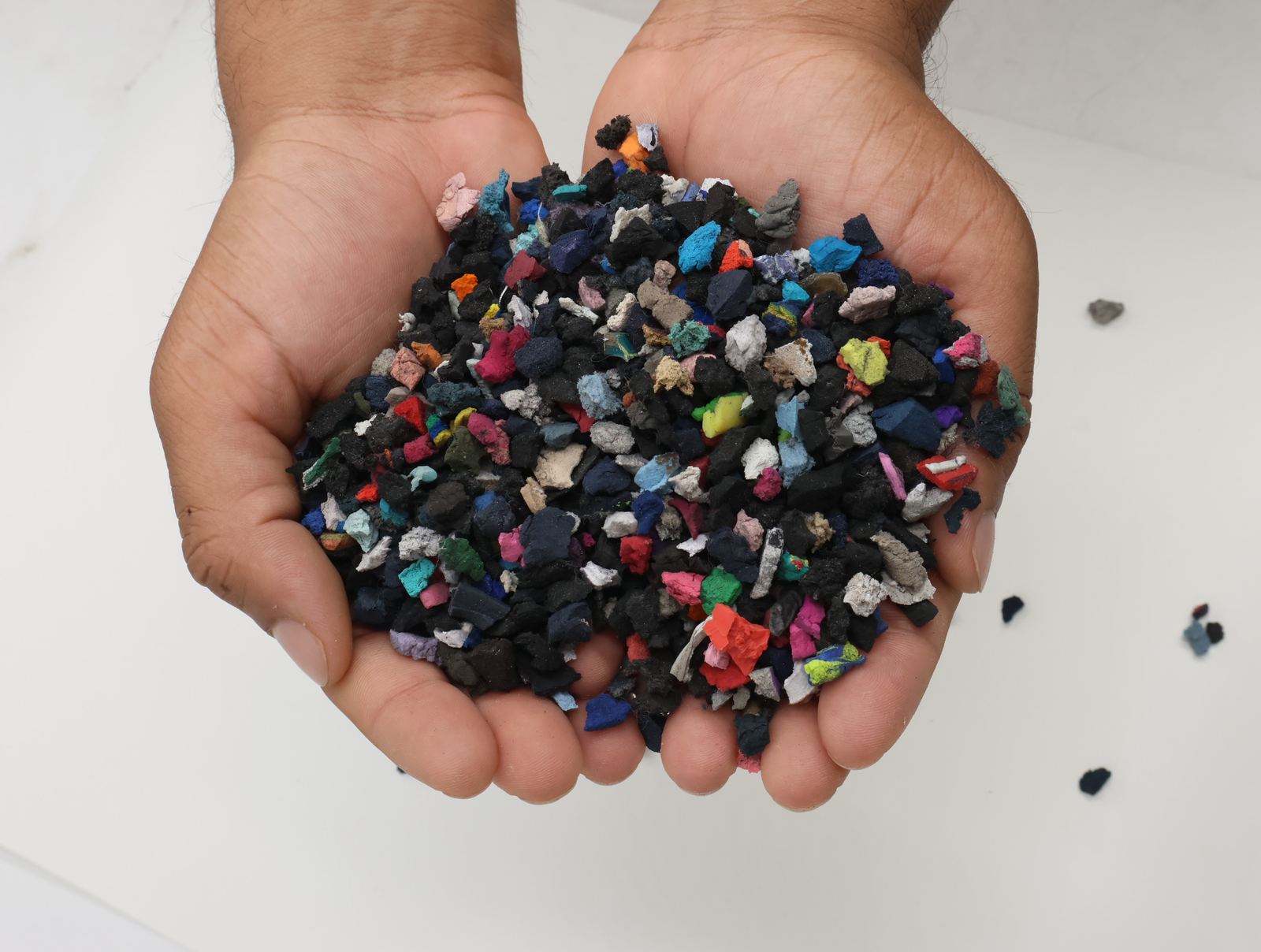
Granulate becomes tiles for gyms, playgrounds and running tracks, and acoustic panels. The mixed synthetic fraction is processed into refuse-derived fuel for cement kilns, replacing coal.
Of the product that cannot be worn again, by weight. Nothing reaches landfill without a documented reason.
We are building better outlets for the mixed fraction. Until they exist, we say what happens to it.